

Custom LLM Development: Private Language Models Built on Your Data
Custom LLM development is the process of training, fine-tuning, and deploying a large language model on your proprietary data so it produces accurate, domain-specific outputs without sending information to third-party servers. Petronella Technology Group, Inc. trains and fine-tunes models on private bare-metal GPU infrastructure. This is not a cloud API wrapper or a prompt engineering service. We perform real model training on real hardware, then deploy the finished model on infrastructure you control. Our team handles everything from data preparation and LLM fine-tuning through on-premise deployment and ongoing optimization, backed by 24+ years of cybersecurity and compliance experience. Your data never leaves your control.
Key Takeaways: Custom LLM Development
- 25 to 40 percent higher accuracy on domain-specific tasks compared to generic cloud LLMs, because the model is trained on your proprietary data and terminology.
- Complete data sovereignty. Your data never leaves your network. You own the model weights, inference logs, and all outputs.
- Fixed infrastructure cost replaces per-token API billing. Organizations spending $5,000 or more per month on cloud AI APIs typically see ROI within 6 to 12 months.
- HIPAA, CMMC, and SOC 2 compliant from day one. Petronella Technology Group deploys models with AES-256 encryption, role-based access, audit logging, and network segmentation.
- Open-weight models including Llama 3, Mistral, DeepSeek, Phi, and Qwen. Zero vendor lock-in. Full control over updates, versioning, and model lifecycle.
- Bare-metal GPU training on NixOS and Linux-first infrastructure. Not a cloud API wrapper. Real model training on real hardware you can audit.
- Full-stack delivery from a single partner. Custom LLM development + cybersecurity + compliance under one roof. No vendor coordination required.
- 6 to 12 week delivery from kickoff to production. Petronella handles data preparation, base model selection, fine-tuning, evaluation, and deployment.
What Is Custom LLM Development and Why Does It Matter?
A custom LLM is a large language model that has been adapted to a specific organization's data, vocabulary, and tasks. Instead of relying on a general-purpose model trained on public internet data, a custom LLM learns from your proprietary documents, processes, and domain knowledge. The result is an AI system that understands your industry terminology, follows your formatting conventions, and produces outputs that match the quality standards your team expects.
The most common approach to building a custom language model is fine-tuning. This takes a pre-trained open-weight model like Llama 3, Mistral, or Phi and trains it further on your curated dataset. Techniques such as LoRA (Low-Rank Adaptation) and QLoRA make this process efficient enough to run on a single GPU server while achieving results that rival models hundreds of times larger on domain-specific benchmarks. Petronella's LLM fine-tuning services use these methods to build models that outperform generic alternatives on your actual use cases.
Custom LLM development matters because generic models were not built for your business. They hallucinate when asked about internal processes, they cannot reference confidential documents, and they send every prompt through third-party infrastructure. For organizations in regulated industries, that data exposure creates compliance risks that are difficult to mitigate. A private LLM trained on your data and running on your infrastructure eliminates those risks entirely. Petronella is not a cloud API reseller or prompt engineering shop. We train models on private bare-metal GPU servers and deploy them on hardware you control, combining custom AI with 24+ years of cybersecurity and compliance expertise so your data never leaves your security perimeter.
Many organizations combine custom LLM fine-tuning with retrieval-augmented generation (RAG) to get the best of both approaches. The fine-tuned model handles core reasoning and domain understanding, while the RAG layer provides access to documents that change frequently. Petronella designs and implements both components as part of a unified enterprise AI strategy, ensuring that each piece works together and meets your compliance requirements.
Custom LLM vs. Cloud AI API vs. RAG-Only
Three common approaches to adding AI capabilities to your organization. This comparison covers the tradeoffs in accuracy, privacy, cost, and compliance that most teams encounter during evaluation.
Custom LLMs for Regulated Industries
Domain-specific AI that understands your terminology, follows your formatting conventions, and meets the compliance requirements of your industry.
Healthcare and Life Sciences
Clinical documentation, discharge summaries, prior authorization letters, and medical literature review. PHI stays on your infrastructure at all times. Full BAA coverage with HIPAA compliance controls including AES-256 encryption, access logging, and network segmentation. Models trained on your clinical protocols produce outputs that match your documentation standards.
Defense and Government
CUI-safe AI for technical manuals, RFP responses, maintenance procedures, and compliance documentation. Air-gapped and ITAR-compliant environments supported. Aligned with CMMC requirements for controlled unclassified information handling. Models run on government-approved hardware with no external network dependencies.
Financial Services
Regulatory filing analysis, risk assessment narratives, client communications, and portfolio reporting. SOC 2 Type II controls with full audit trails and model explainability documentation. Custom models understand SEC filing formats, FINRA requirements, and your firm's specific reporting conventions.
Legal
M and A due diligence, patent analysis, contract review, and research memos. Trained on your firm's precedent database and citation practices. Attorney-client privilege maintained because no data leaves your controlled environment. Reduces research time by 40 to 60 percent on routine document review tasks.
Manufacturing and Engineering
Technical documentation generation, quality control analysis, maintenance scheduling optimization, and supply chain risk assessment. Models trained on your equipment specifications, maintenance logs, and engineering standards produce accurate technical content without the factual errors common in generic AI outputs.
Insurance
Claims processing automation, underwriting support, policy language analysis, and customer communication drafting. Models learn your company's specific policy structures, coverage terminology, and claims adjudication logic to produce outputs that require minimal human editing.
How Private LLM Training Works
Private LLM training starts with a pre-trained open-weight foundation model. These models, such as Meta's Llama 3, Mistral AI's Mistral, DeepSeek, Microsoft's Phi, and Alibaba's Qwen, have already learned general language patterns from large public datasets. Fine-tuning adapts these models to your specific domain by training them further on your curated data. The process changes the model's internal weights so it naturally produces outputs aligned with your terminology, tone, and factual requirements.
Petronella uses parameter-efficient fine-tuning methods, primarily LoRA (Low-Rank Adaptation) and QLoRA (Quantized LoRA), accelerated by tools like Unsloth for faster training throughput on consumer and enterprise GPUs. These techniques update only a small subset of the model's parameters, typically 1 to 5 percent of total weights, while achieving comparable accuracy to full fine-tuning. This means a 7-billion-parameter model can be fine-tuned on a single NVIDIA A100 or H100 GPU in hours rather than days. For organizations with larger compute budgets, Petronella also supports full-parameter fine-tuning and continued pre-training on multi-GPU clusters.
All training runs on Petronella's private bare-metal GPU infrastructure, not rented cloud instances. Our training servers run NixOS and Linux-first configurations that provide reproducible, declarative environments for every training run. This means every dependency, driver version, and system configuration is version-controlled and auditable. For organizations that require air-gapped or on-premise training, this infrastructure can be replicated inside your own data center with identical results.
The quality of your custom LLM depends directly on the quality of your training data. Petronella's data engineering team works with your subject matter experts to curate, clean, and format training datasets. This includes deduplication, PII redaction, formatting standardization, and the creation of instruction-response pairs that teach the model how to handle your specific tasks. A well-curated dataset of 5,000 to 50,000 examples typically produces a model that outperforms a generic LLM with millions of documents in its context window.
After fine-tuning, Petronella runs a structured evaluation process. We benchmark the custom model against the base model and against commercial APIs on your actual use cases, measuring accuracy, hallucination rate, response latency, and compliance with your formatting standards. Only models that measurably outperform the baseline on your evaluation suite are promoted to production. We also test for safety, bias, and edge-case behavior before deployment. This evaluation framework continues after launch, with automated monitoring that detects model drift and triggers retraining when performance drops below defined thresholds.
How Petronella Builds Your Custom LLM
Our structured six-phase process takes a project from initial scoping to production deployment in 6 to 12 weeks, depending on data readiness and project complexity.
-
Requirements Discovery and Data Audit
We map your use cases, review available data sources, assess data quality, and define success metrics. This phase produces a detailed project specification that includes base model recommendations, estimated training requirements, infrastructure sizing, and a timeline with milestones. Most discovery sessions take 1 to 2 weeks.
-
Data Preparation and Pipeline Engineering
Petronella's data engineering team cleans, deduplicates, and formats your training data into instruction-response pairs. We handle PII redaction, sensitive data classification, format standardization, and quality scoring. The output is a versioned, reproducible data pipeline that feeds future model updates.
-
Base Model Selection
We evaluate candidate open-weight models (Llama 3, Mistral, DeepSeek, Phi, Qwen, and others) against your specific requirements for size, speed, accuracy, and licensing. Petronella runs preliminary benchmarks on a sample of your data to identify which base model produces the best starting point for fine-tuning.
-
Fine-Tuning with LoRA and QLoRA
The selected base model is fine-tuned on your curated dataset using parameter-efficient methods accelerated by Unsloth for faster training throughput. Petronella manages hyperparameter optimization, training monitoring, checkpoint selection, and convergence analysis on bare-metal GPU infrastructure running NixOS. Multiple training runs with different configurations are evaluated to find the optimal balance of accuracy and efficiency.
-
Benchmarking, Evaluation, and Safety Testing
We test the fine-tuned model against the base model and commercial APIs on your actual use cases. Metrics include domain accuracy, hallucination rate, response latency, formatting compliance, and safety behavior. Only models that measurably outperform baselines are promoted. Petronella also conducts red-team testing to identify failure modes before deployment.
-
Deployment, Monitoring, and Ongoing Optimization
The production model is deployed to your on-premise infrastructure or private cloud environment with inference optimization (quantization, batching, caching). Petronella configures monitoring for latency, throughput, and output quality. Automated alerts trigger when performance metrics fall below thresholds, and scheduled retraining keeps the model current as your data evolves.
Custom LLM Development Cost: What to Expect
Custom LLM projects at Petronella range from $25,000 for focused fine-tuning engagements to $150,000 or more for full custom development that includes data engineering, multi-model architectures, and on-premise GPU infrastructure deployment. The primary cost drivers are data preparation complexity, model size, infrastructure requirements, and the number of distinct use cases the model needs to handle.
A focused fine-tuning project, where your data is already well-organized and you have a single primary use case, typically costs $25,000 to $50,000 and takes 6 to 8 weeks. A comprehensive custom LLM program that includes data engineering, multiple fine-tuned models, RAG integration, and production infrastructure costs $75,000 to $150,000 and takes 8 to 12 weeks. Enterprise deployments with air-gapped environments, multi-site replication, and advanced security requirements can exceed $150,000.
The ROI calculation favors custom LLMs for organizations with significant AI usage. Cloud AI API costs scale linearly with usage. An organization running 500 employees on commercial AI tools at $20 to $60 per user per month spends $120,000 to $360,000 annually. A custom LLM with fixed infrastructure costs replaces that variable expense. Beyond direct cost savings, custom LLMs deliver higher accuracy on domain tasks, which translates to reduced human review time, fewer errors, and faster throughput on AI-assisted workflows.
Petronella also offers ongoing model management as a monthly service. This covers model monitoring, periodic retraining as your data evolves, infrastructure maintenance, and performance optimization. Organizations that prefer predictable monthly costs instead of project-based billing can structure their entire custom LLM program, including initial development and ongoing operations, as a managed service with fixed monthly fees.
Why Choose Petronella Technology Group for Custom LLM Development
Most AI consultancies resell cloud APIs and call it custom development. Petronella trains models on bare-metal GPU hardware, deploys them on infrastructure you own, and wraps the entire engagement in 24+ years of cybersecurity and compliance expertise.
Bare-Metal GPU Training, Not Cloud API Wrappers
Petronella trains and fine-tunes LLMs on private bare-metal GPU servers. We do not resell OpenAI or Anthropic API access and rebrand it as custom development. Every model we deliver has been trained on physical hardware with weights you own. Our training infrastructure runs NixOS and Linux-first configurations for fully reproducible, auditable environments.
Full-Stack: Custom LLM + Cybersecurity + Compliance
Most AI firms build the model and hand it off. Petronella builds the model, secures the infrastructure, and maintains regulatory compliance as a single provider. Custom LLM development, cybersecurity, and compliance under one roof means no finger-pointing between vendors and no gaps between your AI deployment and your security posture.
Deep Open-Source Expertise
Petronella works with the full spectrum of open-weight models and training tools: Llama 3, Mistral, DeepSeek, Phi, and Qwen for base models. LoRA, QLoRA, and Unsloth for parameter-efficient fine-tuning. We evaluate new open-source releases continuously and recommend the best fit for each client's accuracy, speed, and licensing requirements.
CMMC-RP Certified & RPO for Defense
Craig Petronella is a CMMC Registered Practitioner (CMMC-RP) and Petronella is a Registered Provider Organization (RPO) that provides compliance consulting and remediation. Petronella builds custom LLMs for defense contractors and government agencies that handle controlled unclassified information, with air-gapped deployments that meet CMMC and ITAR requirements.
HIPAA-Compliant LLM Deployments for Healthcare
Petronella signs Business Associate Agreements and deploys custom LLMs with full HIPAA technical safeguards: AES-256 encryption, role-based access, audit logging, and network segmentation. Healthcare organizations trust Petronella because we combine AI expertise with two decades of healthcare compliance experience.
Founded 2002 | BBB A+ Since 2003
Petronella was founded in 2002 and has served clients across healthcare, defense, finance, legal, and manufacturing. Our BBB A+ rating has been maintained since 2003. Craig Petronella is the author of 8+ published books on cybersecurity and technology and hosts the Encrypted Ambition podcast, where he covers AI strategy, compliance, and digital security for business leaders.
Data Sovereignty and Regulatory Compliance
Every prompt sent to a cloud AI service travels through infrastructure you do not own, with data retention policies you did not negotiate. Most commercial AI providers retain prompt data for 30 days by default, and some use submitted data to improve their models. For organizations handling protected health information, controlled unclassified information, or confidential business data, that data exposure creates compliance violations and legal liability.
A custom LLM deployed on your own infrastructure eliminates third-party data exposure entirely. Model weights, training data, inference logs, and all outputs stay within your security perimeter. Petronella deploys custom LLMs with the same security controls we implement for cybersecurity and compliance clients: AES-256 encryption at rest, TLS 1.3 encryption in transit, role-based access controls, comprehensive audit logging, network segmentation, and intrusion detection.
For healthcare organizations, Petronella signs Business Associate Agreements and deploys models with full HIPAA technical safeguards. For defense contractors and government agencies, we support air-gapped deployments with no external network connectivity. For financial services firms, our deployments include the SOC 2 Type II controls and audit trails required by regulators and institutional clients.
Petronella's compliance-first approach to custom LLM development means security controls are designed into the architecture from the start. We do not bolt compliance onto a finished system. Infrastructure hardening, access controls, encryption, and monitoring are configured before the first training run begins, and they remain in place through deployment and ongoing operations. Because Petronella delivers custom LLM development, cybersecurity, and compliance as a single full-stack provider, there are no gaps between your AI deployment and your security posture. One team builds the model, secures the infrastructure, and maintains regulatory compliance. This approach consistently passes audits on the first attempt because every component was built to meet regulatory requirements from day one.
Custom LLM Development FAQ
How much data do we need to train a custom LLM?
What is the difference between fine-tuning and RAG?
How long does a custom LLM project take?
Can a custom LLM be HIPAA compliant?
What does a custom LLM project cost?
Which base models does Petronella use for custom LLM development?
Can Petronella deploy custom LLMs in air-gapped environments?
How does Petronella handle model updates and retraining?
What hardware do we need for a custom LLM?
How does a custom LLM compare to using GPT-4 or Claude with a system prompt?
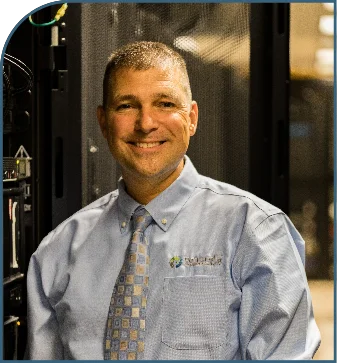
Craig Petronella
CEO, CMMC Registered Practitioner (RP)
Author of 8+ published books on cybersecurity and technology. Host of the Encrypted Ambition podcast.
Stop Sending Proprietary Data to Third-Party AI Services
Every prompt sent to a cloud AI service exposes your data to infrastructure you do not control. Petronella trains models on bare-metal GPU hardware, deploys them on infrastructure you own, and backs every engagement with 24+ years of cybersecurity and compliance expertise. Schedule a free consultation to discuss your use case, data readiness, and the fastest path to a production-ready private language model.
919-348-4912Petronella Technology Group, Inc. · 5540 Centerview Dr., Suite 200, Raleigh, NC 27606
MSPs: Wholesale Custom LLM Path for Client Engagements
Petronella offers custom LLM development to MSP partners via MSP Custom AI Development and the Fleet prototyping ladder. From domain-specific fine-tunes through compliance-aware retrieval stacks — MSPs keep client invoicing, Petronella takes zero hardware margin. Full program details at /msp-partners/.