
RAG Implementation Services: Turn Your Documents Into an AI-Powered Knowledge Engine
RAG implementation services give your organization the ability to ask questions in plain language and receive accurate, cited answers pulled directly from your own documents, databases, and internal knowledge bases. Retrieval-Augmented Generation (RAG) is a technique that connects a large language model to your proprietary data so every AI response is grounded in real information rather than guesswork or outdated training data. Petronella Technology Group, Inc. designs, builds, and deploys enterprise RAG systems that integrate with your existing infrastructure, enforce document-level access controls, and deliver answers your teams can actually trust. Our approach combines deep AI engineering expertise with proven cybersecurity practices so your sensitive data stays protected while your people get faster, better answers.

Key Takeaways: RAG Implementation
- RAG grounds every answer in your data. Unlike standalone LLMs that rely on training data alone, RAG retrieves relevant documents before generating a response, reducing hallucinations and providing source citations.
- Enterprise RAG projects typically cost $50,000 to $150,000+ depending on scope, data volume, and integration complexity. Petronella Technology Group delivers end-to-end RAG implementations with clear milestones and predictable pricing.
- Security and compliance are built in from the start. Petronella enforces document-level access controls, encryption at rest and in transit, audit logging, and data residency requirements for HIPAA, CMMC, and SOC 2 environments.
- RAG works with your existing data sources. SharePoint, Confluence, databases, CRMs, ticketing systems, email archives, PDFs, and custom applications can all be connected into a unified retrieval layer.
- Combine RAG with fine-tuning for best results. RAG handles dynamic knowledge retrieval. Fine-tuning internalizes domain expertise. Petronella builds hybrid systems that use both techniques where appropriate.
- On-premise and private cloud deployments available. For organizations that cannot send data to third-party APIs, Petronella deploys RAG systems entirely within your infrastructure using on-premise AI architectures.
What Is RAG and Why Does Your Organization Need It?
Retrieval-Augmented Generation, commonly called RAG, is an AI architecture that combines information retrieval with text generation. When a user asks a question, the RAG system first searches your document corpus for the most relevant passages, then feeds those passages to a large language model along with the original question. The model generates an answer based on the retrieved content rather than relying solely on its training data. This means the response is grounded in your actual policies, procedures, contracts, technical documentation, and institutional knowledge.
The problem RAG solves is straightforward. Large language models like GPT-4, Claude, and Llama are trained on public internet data. They do not know anything about your internal processes, your customer contracts, your proprietary research, or your compliance documentation. When employees ask an LLM a company-specific question, the model either refuses to answer or generates a plausible-sounding response that may be completely wrong. These hallucinated answers create real business risk, especially in regulated industries where incorrect information can lead to compliance violations, legal exposure, or patient safety issues.
RAG eliminates this problem by ensuring that every AI-generated answer is backed by specific documents from your knowledge base. Each response includes citations pointing to the source material, so users can verify the information themselves. If the system does not find relevant documents, it tells the user that it does not have enough information to answer rather than making something up. This transparency is what separates a production-grade RAG system from a chatbot that occasionally gets things right.
For enterprise organizations, RAG unlocks value that has been trapped inside document repositories for years. Consider a healthcare organization with thousands of clinical protocols spread across SharePoint, a legal team with decades of contracts stored in a document management system, or an engineering department with technical specifications scattered across Confluence, Jira, and email threads. RAG makes all of that knowledge instantly searchable and answerable in natural language. Instead of spending 20 minutes hunting through folders and file shares, an employee asks a question and gets a sourced answer in seconds.
Petronella Technology Group, Inc. has been building custom AI systems for enterprise clients since the emergence of modern LLMs. Our RAG implementation services cover the full lifecycle from initial knowledge audit through production deployment and ongoing optimization. We bring both AI engineering depth and compliance expertise to every project, which means your RAG system will be accurate, fast, and built to meet your regulatory requirements from day one.
See How Petronella Delivers AI Solutions for Enterprise Clients
Hear directly from a Petronella client about working with our team on technology, security, and AI implementation projects. The same hands-on, personalized approach applies to every RAG engagement.
RAG vs. Fine-Tuning: Which Approach Do You Need?
RAG and fine-tuning are complementary techniques, not competitors. Understanding the differences helps you choose the right approach for each use case. For a deeper analysis, read our full RAG vs. Fine-Tuning comparison.
What Our RAG Implementation Services Include
Every RAG project is different, but these core capabilities are present in every enterprise RAG system we build. Each component is designed for production reliability, not just proof-of-concept demos.
Semantic Search and Hybrid Retrieval
Vector-based semantic search understands meaning, not just keywords. When an employee asks "what is our policy on remote work expenses?" the system finds relevant passages even if the document never uses the exact phrase "remote work expenses." We combine semantic search with traditional keyword matching (BM25) in a hybrid retrieval architecture that handles both conceptual questions and specific term lookups. Cross-encoder re-ranking then scores and orders results by relevance before they reach the language model.
Enterprise Data Source Integration
Your knowledge is not stored in one place, so your RAG system should not be limited to one data source. Petronella builds connectors for SharePoint, Confluence, Google Drive, Salesforce, ServiceNow, Jira, Zendesk, email archives, SQL databases, and custom internal applications. Each connector handles authentication, incremental sync, metadata extraction, and change detection so your RAG index stays current as documents are created, updated, and deleted across your organization.
Compliance-Ready Security Architecture
Every RAG system Petronella builds includes document-level access control inheritance, meaning users only receive answers derived from documents they are authorized to view. We implement encryption at rest (AES-256) and in transit (TLS 1.3), audit logging for every query and retrieval action, and data residency enforcement. These controls satisfy HIPAA, CMMC, SOC 2, and PCI DSS requirements out of the box. For organizations with strict data sovereignty needs, we deploy everything within your own infrastructure using private AI architectures.
Hallucination Reduction and Confidence Scoring
Reducing hallucinations is the primary reason organizations choose RAG over standalone LLMs. Petronella implements multiple layers of hallucination prevention: retrieval-grounded generation that constrains the model to retrieved content, confidence scoring that flags low-certainty answers, citation generation that maps every claim to a source document, and fallback mechanisms that tell the user when the system does not have enough information to provide an answer. The result is AI output that your teams can trust and verify.
Advanced Chunking and Embedding Optimization
How you split documents into chunks and which embedding model you choose have a massive impact on retrieval quality. Petronella uses semantic chunking strategies optimized for each document type. Technical documentation gets different treatment than legal contracts. We benchmark multiple embedding models against your actual data and query patterns to find the best fit. Our pipeline supports overlapping chunks, hierarchical chunking, and parent-child chunk relationships so the model always has enough context to generate a complete answer.
Conversational Memory and Multi-Turn Interactions
Real users do not ask isolated questions. They have conversations where follow-up questions depend on previous answers. Petronella builds RAG systems with conversational memory that tracks dialogue context, resolves pronouns and references, and reformulates queries across multi-turn interactions. If a user asks "what is our PTO policy?" and follows up with "does that apply to contractors too?", the system understands that "that" refers to the PTO policy without the user repeating themselves.
How Enterprise RAG Architecture Works
A production RAG system has three main components: the ingestion pipeline, the retrieval layer, and the generation layer. Each component has specific technical requirements that determine the overall quality, speed, and reliability of the system.
Ingestion Pipeline. This is where raw documents are transformed into searchable vector representations. The pipeline handles document loading from multiple sources, text extraction from PDFs, Word documents, Excel files, HTML pages, emails, and database records. It then applies intelligent chunking to split documents into passages of the right size for retrieval. Each chunk is converted into a numerical vector using an embedding model and stored in a vector database. The pipeline also extracts and preserves metadata like document titles, authors, dates, access permissions, and file paths. Petronella configures incremental sync so new and updated documents are automatically ingested without reprocessing the entire corpus.
Retrieval Layer. When a user asks a question, the retrieval layer converts the question into the same vector space as the stored documents and finds the most similar passages. Petronella uses hybrid retrieval that combines dense vector search (for semantic understanding) with sparse keyword search (for exact matches on names, numbers, and technical terms). A cross-encoder re-ranking model then scores the top results for relevance, pushing the most useful passages to the top. The retrieval layer also enforces access controls at query time, filtering results to only include documents the requesting user is authorized to see. We support multiple vector databases including Pinecone, Weaviate, Qdrant, pgvector, Milvus, and ChromaDB. For on-premise and air-gapped deployments, pgvector and ChromaDB are popular choices because they run entirely on your own servers with zero external dependencies. Petronella selects the best option based on your scale, latency requirements, and deployment constraints.
Generation Layer. The retrieved passages are assembled into a prompt along with the user's question and sent to a large language model for answer generation. Petronella configures the prompt engineering to constrain the model's output to the retrieved context, reducing hallucination. The generation layer adds source citations, applies confidence scoring, and formats the response for the user interface. For on-premise deployments, we serve open-source models like Llama, Mistral, or Qwen using Ollama or vLLM on bare metal GPU servers in our Raleigh, NC hardware lab or on your own infrastructure. For cloud deployments, we integrate with OpenAI, Anthropic, Google, and other commercial APIs. Petronella also implements response caching, token optimization, and streaming output so users see answers appearing in real time rather than waiting for the full response to generate.
Enterprise RAG Use Cases by Industry
RAG delivers measurable value across every industry where employees spend significant time searching for information. Here are the most common use cases we implement for enterprise clients.
Healthcare: Clinical Protocol Search
Clinicians ask natural language questions about treatment protocols, drug interactions, and care procedures. The RAG system retrieves answers from your clinical documentation with citations, reducing the time doctors and nurses spend searching for information during patient care. Access controls ensure that administrative staff see different document sets than clinical providers. All queries and responses are logged for HIPAA compliance.
Legal: Contract Analysis and Research
Attorneys search across thousands of contracts, case files, and regulatory documents using natural language. RAG returns relevant clauses, precedent language, and regulatory references with exact document citations. This reduces legal research time from hours to minutes per query. The system handles complex questions like "which contracts have indemnification caps below $1 million?" by combining semantic understanding with structured data extraction.
Defense: Technical Documentation Access
Defense contractors and government agencies manage millions of pages of technical specifications, maintenance manuals, and compliance documentation. RAG provides instant access to the right passage within the right document. Petronella builds these systems to meet CMMC requirements with FedRAMP-aligned infrastructure, CUI handling procedures, and NIST 800-171 controls. On-premise deployment ensures controlled unclassified information never leaves the authorized environment.
Financial Services: Regulatory Compliance
Compliance teams need quick answers about regulatory requirements, internal policies, and audit documentation. RAG enables natural language queries across regulatory filings, compliance manuals, and policy libraries. When regulations change, new documents are ingested immediately and the system begins returning updated answers. This eliminates the dangerous gap between when a regulation is published and when employees become aware of its requirements.
IT and Engineering: Knowledge Management
Engineering teams accumulate knowledge across Confluence, Jira, GitHub, Slack, and email. When a new engineer joins or a team member encounters an unfamiliar system, they should not have to search through dozens of sources to find the answer. RAG unifies all technical knowledge into a single search interface. Questions like "how do we deploy the payment service to production?" return step-by-step answers sourced from your actual runbooks and documentation.
Customer Support: Agent Assist
Support agents search product documentation, previous ticket resolutions, and internal knowledge bases to resolve customer issues. RAG provides real-time suggested answers as agents interact with customers, reducing average handle time and improving first-contact resolution rates. The system learns from your ticket history and documentation to surface the most effective resolution paths for each type of inquiry.
How Petronella Implements Enterprise RAG Systems
Our RAG implementation process follows a structured methodology with clear deliverables at each phase. Most projects complete in 8 to 16 weeks depending on scope and data complexity.
-
Knowledge Audit and Requirements Discovery
We start by cataloging your document sources, data volumes, file types, access control structures, and compliance requirements. This audit identifies which data sources should be included in the RAG system, how documents are organized, where access permissions are managed, and what types of questions your users need to answer. You receive a detailed architecture proposal with cost estimates, timeline, and technology recommendations tailored to your environment.
-
Infrastructure Setup and Data Pipeline Development
Petronella provisions the vector database, configures the embedding pipeline, builds data source connectors, and establishes the ingestion workflow. For cloud deployments, we configure the infrastructure in your AWS, Azure, or GCP account. For on-premise deployments, we install and configure everything on your hardware. The data pipeline handles document loading, text extraction, chunking, embedding generation, metadata extraction, and vector storage. We also build incremental sync so new and updated documents are processed automatically.
-
Embedding and Chunking Optimization
This phase is where most RAG projects succeed or fail. Petronella benchmarks multiple embedding models against your actual documents and query patterns. We test different chunking strategies including fixed-size chunks, semantic chunks, and hierarchical chunks to find the configuration that produces the best retrieval accuracy. Our engineers build a golden test set of question-answer pairs from your real-world use cases and evaluate retrieval precision and recall against that test set. This data-driven approach eliminates guesswork and ensures the system delivers accurate results from day one.
-
Retrieval Tuning and Re-Ranking
Once the base retrieval pipeline is working, we tune it for maximum accuracy. This includes configuring hybrid search weights (balancing semantic vs. keyword retrieval), training or selecting cross-encoder re-ranking models, implementing query expansion and reformulation, and fine-tuning retrieval parameters like top-k results and similarity thresholds. We test edge cases including ambiguous queries, multi-topic questions, and queries that should return "no relevant information found" to ensure the system handles real-world usage patterns gracefully.
-
Security, Access Controls, and Compliance Configuration
Petronella configures document-level access control inheritance so the RAG system respects your existing permission structures. We implement audit logging, encryption, query rate limiting, data loss prevention filters, and compliance controls specific to your regulatory environment. For HIPAA environments, we add PHI detection and handling. For CMMC environments, we implement CUI marking and access restrictions. Every security control is documented and tested before production deployment.
-
User Interface and API Development
We build the interface your users will interact with, whether that is a web application, a Slack or Teams bot, an API endpoint for integration into your existing tools, or a combination of all three. The interface includes source citation display, confidence indicators, feedback mechanisms (thumbs up/down for answer quality), and conversation history. Petronella designs the UI for your specific user personas and workflow context.
-
Quality Evaluation and User Acceptance Testing
Before production deployment, we run comprehensive quality evaluation using your golden test set, measure retrieval accuracy (precision@k, recall@k, MRR), evaluate answer quality with human reviewers, and load test the system to confirm it meets your performance requirements. Your team participates in user acceptance testing to validate that the system answers real-world questions correctly and that the user experience meets their needs.
-
Production Deployment and Ongoing Optimization
Petronella handles production deployment with zero-downtime rollout, monitoring configuration, alerting setup, and documentation. After launch, we monitor retrieval quality, user feedback, query patterns, and system performance. We use this data to continuously optimize chunking strategies, retrieval parameters, and prompt engineering. Most RAG systems improve significantly in the first 90 days of production usage as we incorporate real user behavior data into the optimization cycle.
RAG Implementation Cost and ROI
Enterprise RAG implementation projects typically range from $50,000 to $150,000 depending on the number of data sources, document volume, compliance requirements, and deployment model (cloud vs. on-premise). Smaller focused implementations that connect a single data source and serve one department can start at $20,000 to $40,000. Large-scale deployments with multiple data sources, complex access controls, custom connectors, and compliance documentation can exceed $200,000.
The ongoing cost after deployment includes vector database hosting (typically $200 to $2,000 per month depending on data volume), LLM API costs or on-premise GPU infrastructure, and optional Petronella managed services for monitoring and optimization. For organizations using on-premise hardware, the infrastructure investment replaces the monthly API cost with a one-time hardware purchase that Petronella can help you size and configure.
The ROI calculation for RAG is straightforward once you measure how much time your employees currently spend searching for information. Research by McKinsey shows that knowledge workers spend an average of 1.8 hours per day searching for information. For an organization with 100 knowledge workers at an average fully-loaded cost of $75 per hour, that amounts to over $3.3 million per year spent on information retrieval. Even a 30% reduction in search time delivers over $1 million in annual productivity savings, far exceeding the cost of a RAG implementation.
Beyond productivity, RAG delivers value through faster onboarding (new employees become productive sooner when they can ask questions and get sourced answers), reduced errors (answers are grounded in authoritative documents rather than tribal knowledge), improved compliance (audit trails for every question and answer), and better customer outcomes (support agents resolve issues faster with AI-assisted search). Petronella provides a detailed ROI analysis as part of our enterprise AI strategy consulting engagement so you can build the business case before committing to a full implementation.
RAG Implementation Is Right For You If
RAG implementation delivers the highest return for organizations that have significant institutional knowledge locked in documents that employees struggle to find and use. You are a strong fit for RAG if your organization matches any of these profiles.
You have thousands of documents and your people cannot find what they need. If employees regularly complain that they cannot find policies, procedures, or past decisions, your knowledge management problem is a retrieval problem. RAG solves retrieval at scale. The more documents you have, the more value RAG delivers because the alternative (manual search through folder structures) becomes exponentially slower as your document corpus grows.
You operate in a regulated industry and need audit trails. Healthcare organizations subject to HIPAA, defense contractors subject to CMMC, and financial institutions subject to SOC 2 need AI systems that log every query, enforce access controls, and provide traceable citations. Petronella builds RAG systems with compliance as a first-class requirement, not an afterthought bolted on after deployment.
You tried ChatGPT or Copilot and found it unreliable for company-specific questions. Off-the-shelf AI tools do not know your internal data. They produce generic answers that may be inaccurate for your specific context. RAG connects the same powerful language models to your actual documents, transforming them from generic assistants into company-specific knowledge engines. The model's language capabilities stay the same. What changes is the source of truth behind every answer.
You need to keep data on-premise or within your own cloud. Many organizations cannot send proprietary data to third-party APIs due to contractual restrictions, regulatory requirements, or internal security policies. Petronella deploys RAG systems entirely within your environment using private AI solutions and open-source models. Your data never leaves your control, and you do not depend on any external API for the system to function.
RAG Implementation FAQ
What is RAG and how is it different from a regular chatbot?
What document types can be ingested into a RAG system?
How do you keep sensitive data secure in a RAG system?
Should we use RAG, fine-tuning, or both?
What does a RAG implementation cost?
How long does a RAG implementation take?
Can RAG work with on-premise or air-gapped environments?
How accurate are RAG-generated answers?
What vector databases do you support?
How does RAG handle document permissions and access control?
Why Choose Petronella for RAG Implementation
Most AI consultancies can spin up a demo. Petronella builds RAG systems that run in production, on real hardware, with security controls that satisfy auditors. Here is what makes us different.
Bare Metal GPU Infrastructure
Petronella runs vector databases and embedding models on bare metal GPU servers in our hardware lab in Raleigh, NC. We do not rely on third-party cloud abstractions for performance-critical workloads. When your RAG system needs low-latency inference or high-throughput embedding generation, we deploy it on dedicated hardware that we own, configure, and maintain. This gives you predictable performance, fixed costs, and complete control over where your data lives.
Open-Source Expertise
Petronella has deep production experience with the open-source AI stack: Ollama and vLLM for model serving, pgvector and ChromaDB for vector storage, LangChain and LlamaIndex for orchestration, and Llama, Mistral, and Qwen for generation. Open-source tools give you freedom from vendor lock-in, full transparency into how your system works, and the ability to customize every layer of the pipeline. We also integrate with commercial APIs from OpenAI, Anthropic, and Google when they are the right fit for your use case.
Full-Stack: RAG + Cybersecurity + Compliance
Most RAG vendors build the AI and leave you to figure out security on your own. Petronella delivers the full stack. We build the RAG pipeline, implement the cybersecurity controls, and handle the compliance documentation. Your data stays secure from ingestion through retrieval through answer generation. You do not need to hire a separate security firm to audit what your AI vendor built.
RAG for Defense Contractors with CUI
Defense contractors working with Controlled Unclassified Information (CUI) need RAG systems built to CMMC standards. Craig Petronella is a CMMC Registered Practitioner (CMMC-RP), and Petronella is a Registered Provider Organization (RPO). Petronella builds RAG systems that handle CUI with proper marking, access controls, encryption, and audit logging that satisfy NIST 800-171 requirements. All processing stays on-premise within your authorized environment. No data leaves your network.
Healthcare RAG with HIPAA Built In
Healthcare organizations need RAG systems where HIPAA compliance is built into the architecture, not bolted on after the fact. Petronella implements PHI detection, role-based access controls, audit logging, encryption, and Business Associate Agreement compliance as foundational elements of every healthcare RAG deployment. Clinicians get fast, cited answers from clinical documentation. IT and compliance teams get the audit trails and access controls they need.
Founded 2002 | BBB A+ Since 2003
Petronella is not a startup that appeared last year riding the AI hype cycle. We have been in business since 2002, serving clients with a BBB A+ rating maintained since 2003. Craig Petronella has published 8+ books on technology and security and hosts the Encrypted Ambition podcast. When you choose Petronella for your RAG implementation, you are working with a company that has a 24-year track record of delivering enterprise technology projects and standing behind them long after launch.
Your RAG Implementation Expert
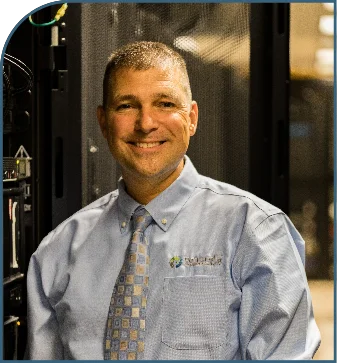
Craig Petronella
Founder and CEO, Petronella Technology GroupCraig founded Petronella in 2002 and has spent over 24 years helping organizations solve complex technology, security, and compliance challenges. He is the author of 8+ published books on cybersecurity and technology, and hosts the Encrypted Ambition podcast where he interviews industry leaders on AI, security, and digital transformation. Craig leads Petronella's AI practice, working directly with enterprise clients on RAG implementations, custom LLM development, and private AI deployments.
Craig is a CMMC Registered Practitioner (CMMC-RP), and Petronella is a Registered Provider Organization (RPO), which means every RAG system Petronella builds meets the security and compliance standards that regulated industries require. His hands-on approach means you work directly with the person who understands both the AI engineering and the security architecture. Craig and his team have served clients across healthcare, defense, legal, financial services, and government from Petronella's hardware lab in Raleigh, NC, building systems that run on real infrastructure, not just cloud abstractions.

Ready to Turn Your Knowledge Base Into a Competitive Advantage?
Your documents contain answers that your employees need right now. A RAG implementation from Petronella connects your teams to that knowledge through AI-powered search that is fast, accurate, cited, and secure. Schedule a free RAG consultation to discuss your data sources, use cases, and requirements. Our engineers will evaluate your environment and deliver a detailed architecture proposal with clear pricing and timeline.
919-348-4912Petronella Technology Group, Inc. · 5540 Centerview Dr., Suite 200, Raleigh, NC 27606